Car Carriers Face Fuel Supply and Emissions Accounting Challenges
More than 140 industry representatives discuss emissions accounting, green shipping corridors and safe transport of new-energy vehicles
Shanghai, China, 20 October 2026 – The 2026 Fall Meeting of the Global Ro-Ro Community (GRC), hosted by GRC and organized by DNV, was held in Shanghai on 20 October. As GRC's first major Fall Meeting in China, the event brought together more than 140 representatives from across the global ro-ro value chain and featured the release of a third-party verified unified greenhouse gas (GHG) accounting model for ro-ro shipping. Through discussions spanning maritime decarbonisation, emissions accounting, green shipping corridors and cargo safety, participants explored practical pathways to support the industry's transition toward net-zero emissions.
The meeting convened representatives from ro-ro shipping operators, classification societies, port operators, car carrier shipbuilders, automotive manufacturers and research institutions. Discussions focused on four key themes: the green transition of ro-ro shipping, the standardization of GHG accounting, implementation of green shipping corridors, and the safe maritime transport of new-energy vehicles. The event provided a platform for dialogue and collaboration across the global ro-ro value chain.
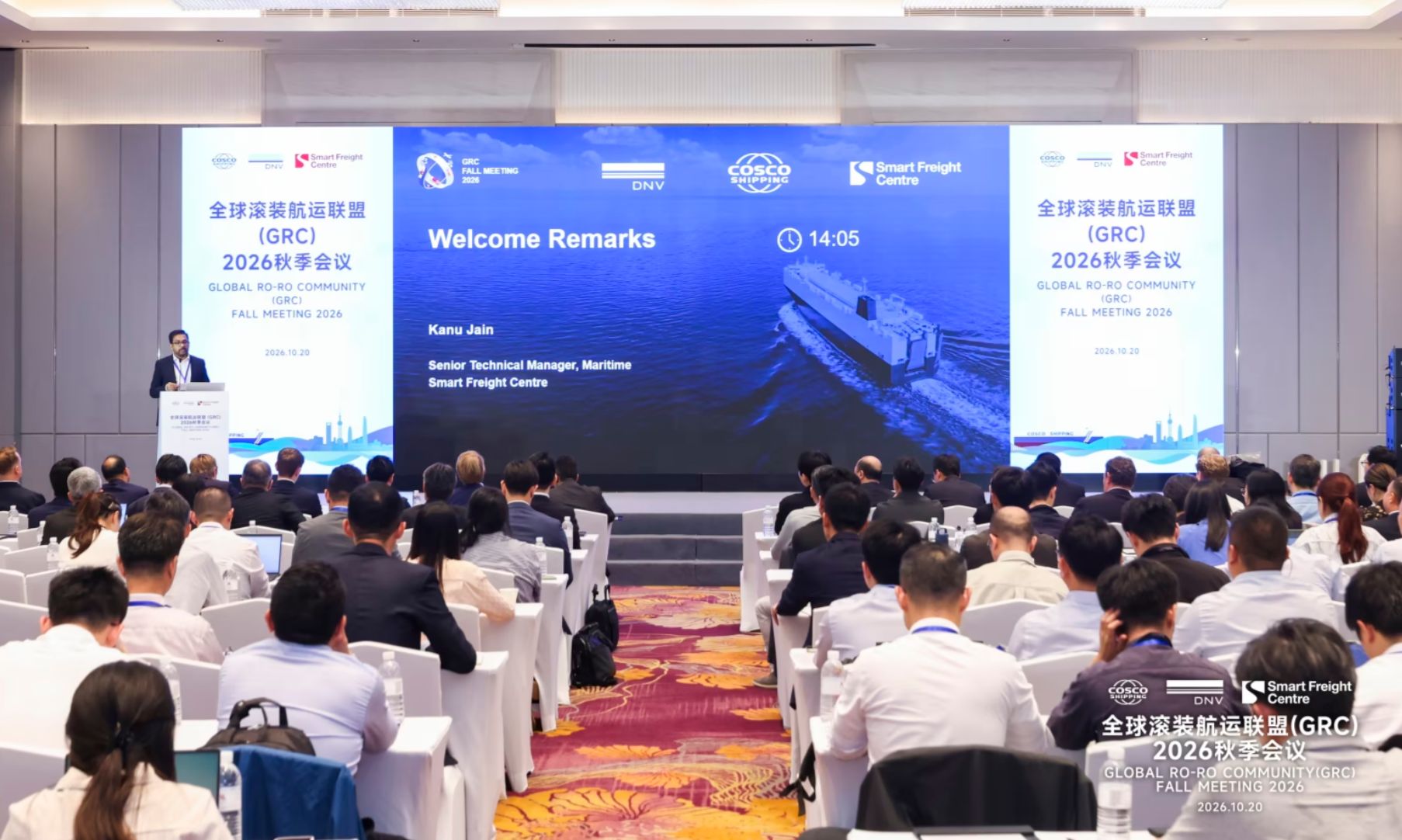
As a cross-industry collaboration platform for the ro-ro sector, GRC's members collectively represent approximately 80% of global pure car and truck carrier (PCTC) capacity. The community aims to address industry data challenges by developing a unified, auditable and comparable methodology for calculating GHG emissions from ro-ro shipping, aligned with internationally recognized frameworks such as ISO 14083 and the GLEC Framework. Through this work, GRC seeks to provide practical industry input to evolving regulatory frameworks, including the IMO GHG Strategy, the EU Emissions Trading System (EU ETS) and FuelEU Maritime, while supporting shipping companies, cargo owners and automotive manufacturers in producing credible Scope 3 emissions disclosures.
The selection of Shanghai as host city reflects the growing importance of China in global ro-ro trade. China is now the world's largest automobile-exporting country, while Shanghai has developed into one of the world's leading automotive export hubs. In 2025, Shanghai Haitong Auto Terminal handled 2.738 million exported vehicles, an increase of more than 40% year on year. On average, around 7,500 vehicles were shipped daily to 295 ports across 135 countries and regions.
On 19 October, GRC members visited Shanghai Haitong International Auto Terminal, one of the world's largest automotive ro-ro terminals. The visit provided participants with first-hand insight into vehicle handling operations, port infrastructure and the terminal's green operational practices.
China's shipbuilding industry also plays a central role in the renewal of the global car-carrying fleet. According to Clarkson data, Chinese shipyards have secured more than 80% of global newbuilding orders for PCTCs in recent years. Most of these vessels feature LNG dual-fuel or other lower-emission technologies, supporting the modernization and decarbonisation of the global ro-ro fleet.
At the same time, the maritime decarbonisation landscape continues to evolve rapidly. While a growing number of new vessels are being delivered with alternative-fuel capabilities, challenges remain around fuel availability, bunkering infrastructure, commercial viability, interoperability of emissions data and the safe transport of new-energy cargoes. Participants agreed that addressing these issues will require coordinated action across the value chain.
The conference programme included opening remarks, keynote speeches, industry outlook presentations, a fireside discussion, GRC project updates and a concluding roundtable discussion. Welcome remarks were delivered by Kanu Jain, Senior Technical Manager at Smart Freight Centre. Du Xiaotian, Deputy General Manager of COSCO SHIPPING Car Carriers, delivered the opening keynote address. Cristina Saenz de Santa Maria, CEO Maritime at DNV, attended the meeting and delivered the closing remarks.
DNV experts Vegar Rype and Benjamin Witt presented perspectives on decarbonisation trends in the maritime industry. A dedicated session on green shipping corridors featured Jesse Fahnestock from the Global Maritime Forum, Yasuyuki Sakurai from Wallenius Wilhelmsen, Tony Matsudaira from NYK Line and Chen Ge from Shanghai Haitong Terminal, who shared practical experiences and insights from different markets.
In his keynote speech, titled China's Role in Shaping the Future of Ro-Ro Shipping, Du Xiaotian examined how rising Chinese vehicle exports are reshaping global ro-ro trade patterns. He also shared China's experience in developing greener fleets and advancing standards for the maritime transport of new-energy vehicles, while highlighting the importance of industry collaboration in supporting future growth.
During the industry‑outlook session, DNV experts assessed global ro‑ro decarbonisation trends. Ro‑ro shipping is among the maritime segments where alternative‑fuel adoption is advancing rapidly. Nevertheless, hardware equipped for dual‑fuel operation does not guarantee sustained, economically viable operation on low‑carbon fuels. Volatile fuel prices and lagging global bunkering‑network deployment continue to limit real‑world emission‑reduction benefits from green technologies. Participants reviewed the latest developments in IMO GHG‑framework negotiations, assessed industry responses under multiple regulatory scenarios, evaluated the applicability of Book‑and‑Claim market mechanisms within ro‑ro operations, and explored opportunities and risks associated with market‑based decarbonisation instruments.
The fireside chat centred on Green Shipping Corridors: Accelerating Maritime Decarbonisation through Collaboration. Panelists examined business models and implementation bottlenecks for green shipping corridors and stressed the importance of robust verification regimes to mitigate greenwashing risks.
The release of GRC’s project outputs represented the conference’s most significant deliverable. Ro‑ro vessels spend nearly half of their voyage time in ballast conditions. The absence of globally consistent calculation methodologies has long hindered comparable carbon‑data benchmarking and practical compliance reporting. To resolve this long‑standing industry challenge, GRC presented its unified greenhouse‑gas accounting model independently verified by verification body like DNV, establishing a ballast conversion factor of approximately 1.23. The model creates a common measurement baseline for shipowners, cargo owners and third‑party verifiers, strongly supporting corporate compliance reporting and the benchmarking of emission‑reduction performance.
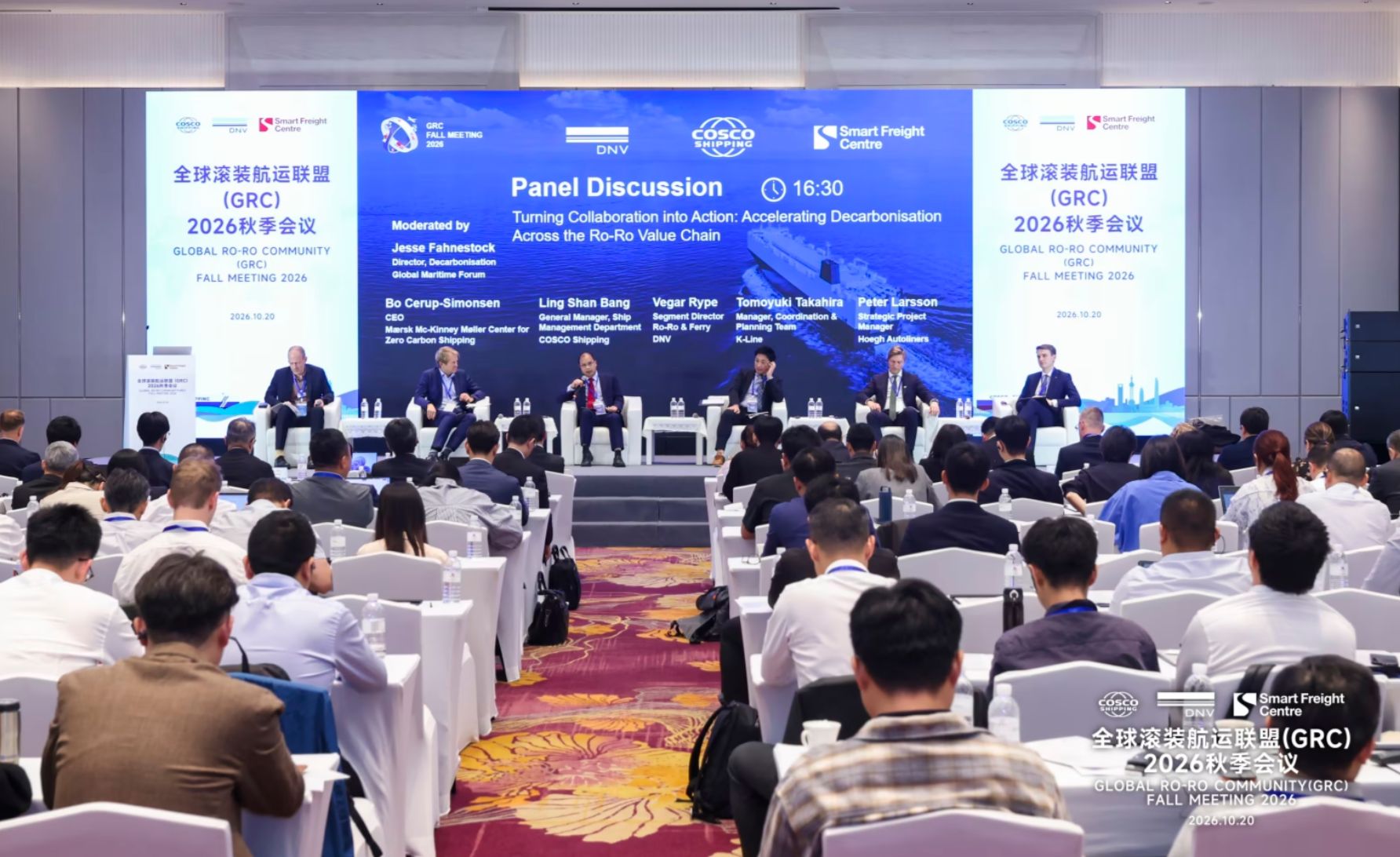
The concluding roundtable discussion, themed " Turning Collaboration into Action: Accelerating Decarbonisation Across the Ro-Ro Value Chain" focused on how industry stakeholders can move from ambition to implementation. Participants agreed that achieving net-zero emissions in ro-ro shipping cannot be accomplished by any single company or country alone. Closer cooperation among shipping companies, fuel suppliers, ports, automotive manufacturers and classification societies will be essential. Three priority areas emerged from the discussions: advancing greater alignment of carbon-accounting methodologies globally; scaling up green shipping corridor and demonstration projects; and sharing operational experience and best practices for the safe transport of new-energy vehicles.
In her closing remarks, Cristina Saenz de Santa Maria noted that the ro-ro sector is moving from discussions about decarbonisation targets to practical action. She highlighted the importance of reliable and comparable emissions data as a foundation for industry-wide collaboration and emphasized that initiatives such as GRC can help accelerate progress by promoting common methodologies and facilitating dialogue across the value chain.
Participants also highlighted GRC's role as a neutral platform that connects companies, regions and different parts of the supply chain. By turning individual experiences into shared industry approaches, the community can help reduce barriers to collaboration and support a more efficient transition to lower-carbon maritime transport. The Shanghai meeting further strengthened exchanges between stakeholders from different regions and contributed to ongoing discussions around the development of future industry standards.
Looking ahead, GRC will continue to refine its emissions-accounting framework, advance green shipping corridor pilot projects and facilitate the exchange of knowledge on the safe transport of new-energy cargoes. Through continued collaboration, the community seeks to support the orderly transition of the global ro-ro sector toward net-zero emissions.
作者:航运星球日报。
本文为航运星球日报专栏作者观点,
不代表航运星球日报立场,
不承担法律责任文章及观点也不构成投资意见。